
Home › Guides › Pond, creek, and rain barrel pumping
How to Pump Water from a Pond, Creek, or Rain Barrel to Your Garden
With a 12V pump, a battery, or solar · Updated October 18, 2026
You've got water sitting in a pond, a creek, or a row of rain barrels, and a garden that's thirsty. A small 12V pump can move it there with no outlet nearby and no gas engine. Before you buy anything, measure two things. They decide which pump will actually do the job.
- Measure the height from the water's surface up to the end of the hose, and the distance the hose has to run.
- For beds, drip lines, and filling a tank: drop a 12V submersible pump in the water, set on a brick.
- For pushing water far uphill or to a spray nozzle: put a 12V diaphragm pump on the bank, with a strainer on the intake hose.
- Power it with a 12V battery, a solar kit that charges the battery, or a 110V-to-12V power supply.
1. Measure height and distance
Height (lift) is what limits a pump most. Measure straight up, from the surface of the water to the highest point the hose reaches. A garden 15 ft above the pond means 15 ft of lift, no matter how far away it is.
Every pump lists a max lift. At that height the water just barely reaches the end of the hose: the flow is zero. The higher you push, the less comes out. For a useful flow, keep the height under about half of the pump's max lift.
Distance on level ground costs much less than height, but a long, narrow hose slows the water down. For runs over about 50 ft, use the widest hose the pump's ports allow.
2. Pick the pump
Swipe the table sideways to see every column →
| Pump | Flow | Max lift | Where it sits | Best for |
|---|---|---|---|---|
| Quiet 12V Submersible | Up to 210 GPH | 20 ft | In the water | Rain barrels, small beds, troughs |
| 12V Submersible, 260 GPH | Up to 260 GPH | 26 ft | In the water | Ponds, tanks, bigger gardens |
| 6–24V Submersible | Up to 290 GPH | 26 ft | In the water | Solar and 24V systems |
| GOODPUMPS Compact | 1.3–1.6 GPM (78–96 GPH) | Rated by pressure: 73–115 PSI | On the bank, dry | Long or uphill runs, spray nozzles |
| High-Flow 5 GPM | 5 GPM (300 GPH) | About 100 ft | On the bank, dry | Filling big tanks, high gardens |
| 12V / 24V Deep Well Pump | About 1.7 GPM | Up to 230 ft | Down the well | Wells, cisterns, high tanks |
Submersible or diaphragm?
Submersible pumps sit under the water. They're quiet, gentle, and move a lot of water at low pressure, which is exactly what drip lines and soaker setups want. They have to stay fully under water, so they're not for a creek that dries up in August.
Diaphragm pumps sit dry on the bank and pull water up through an intake hose: they're self-priming. They move less water but build far more pressure, so they push farther, higher, and through a spray nozzle. Keep them out of the rain, and put a strainer on the intake.
3. Power it: battery, solar, or outlet
- 12V battery: the simplest. A clip cable with a fuse connects the pump in seconds. A 30 W submersible draws about 2.5 A, so a 100Ah lithium battery runs it for well over a day of watering.
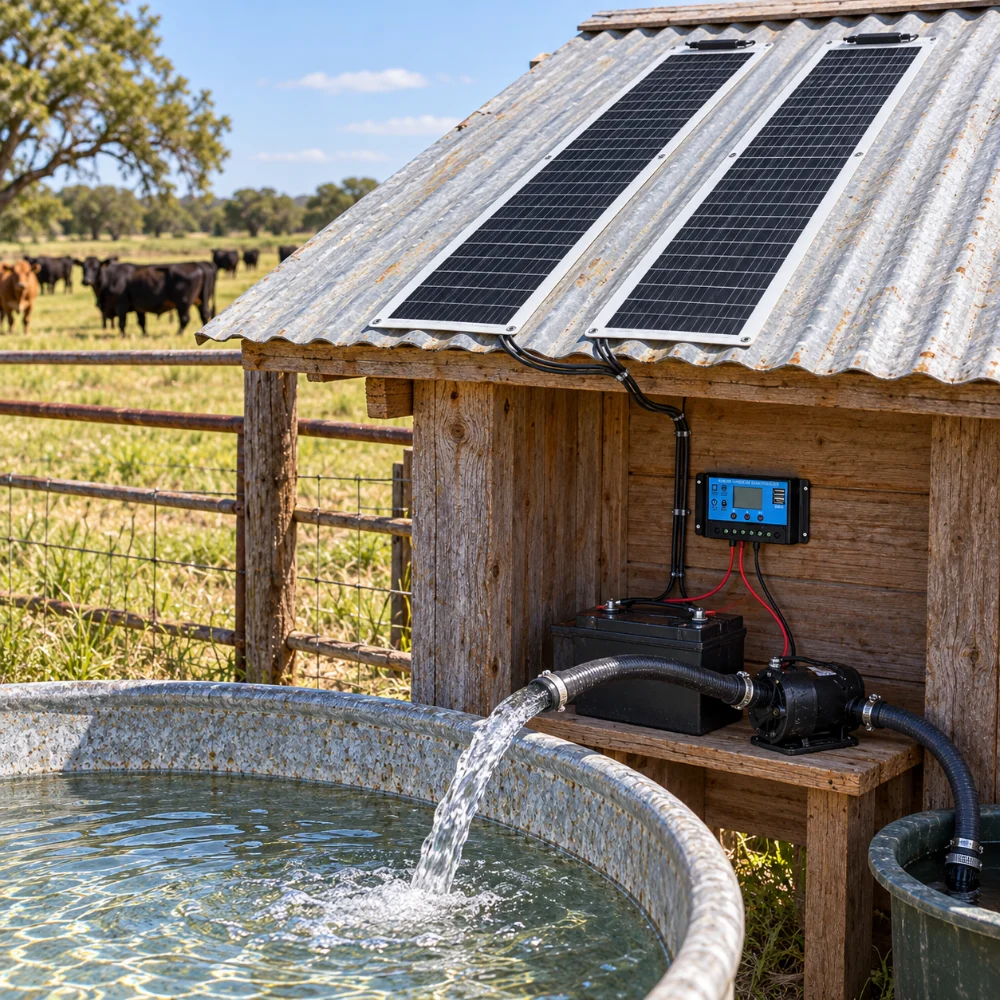
- Solar: panel → charge controller → battery → pump. Our 100W Solar Charging Kit puts roughly 20–25 Ah into a 12V battery on a full sunny day. That's about 8–10 hours of a 30 W submersible, every day, with nothing to plug in.
- Wall outlet: if there's power in a shed or barn nearby, a 110V to 12V power supply runs one submersible or one Compact. Keep the power supply indoors and run 12V wire out to the pump.
Fuse size, wire gauge, and the order of the connections are all in how to wire a 12V water pump.
4. Rain barrel to drip lines
A rain barrel on its own gives very little pressure: a barrel raised on two cinder blocks makes only about 1–2 PSI at the spigot. That trickles through a short drip line, but not much more. A small pump fixes that. There are two ways to set it up.
Option A: pump straight into the drip line
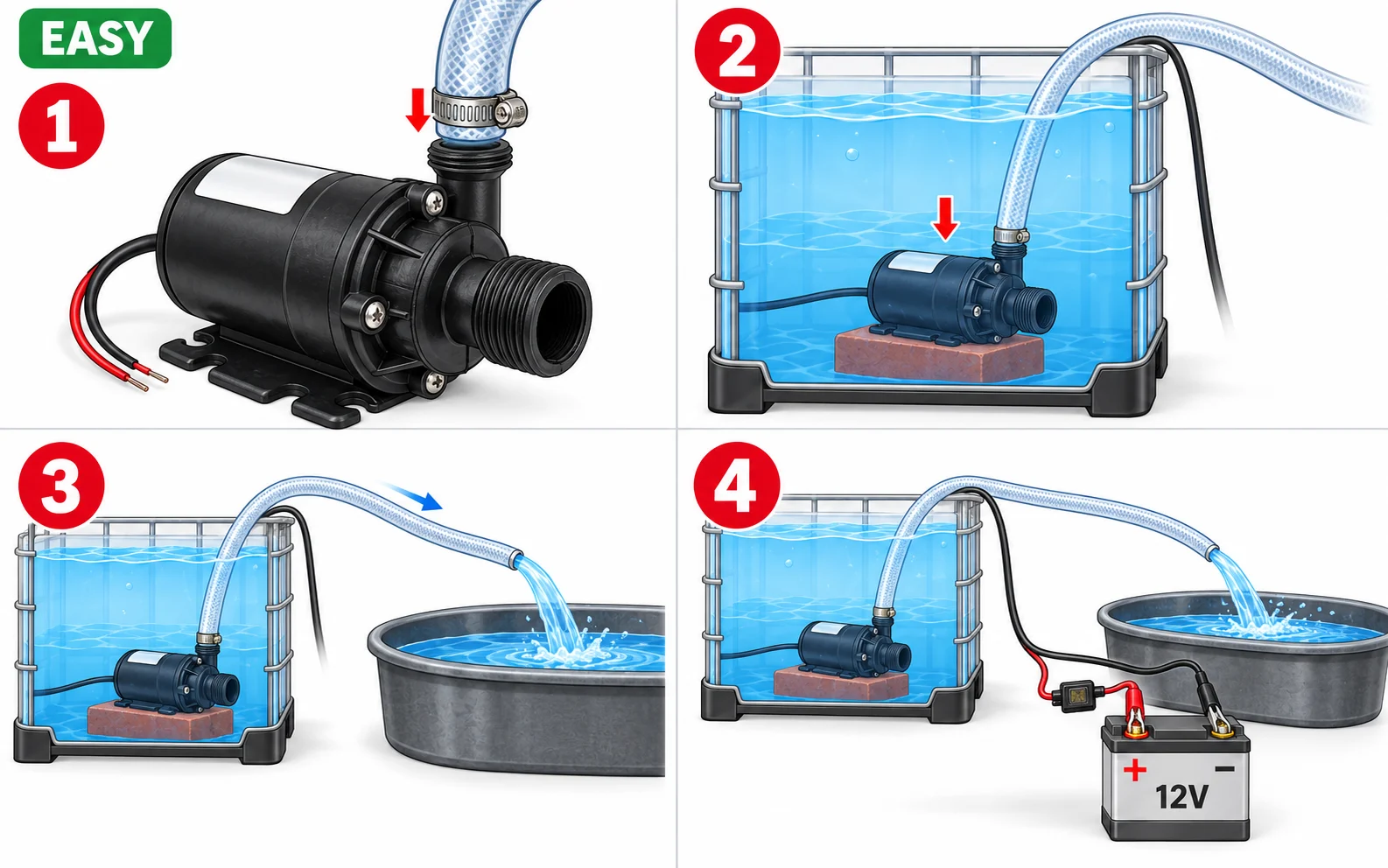
- Put a submersible pump on the bottom of the barrel, on a flat stone or brick if there's sediment.
- Run clear vinyl hose from the pump to the garden, with a hose clamp on each barb.
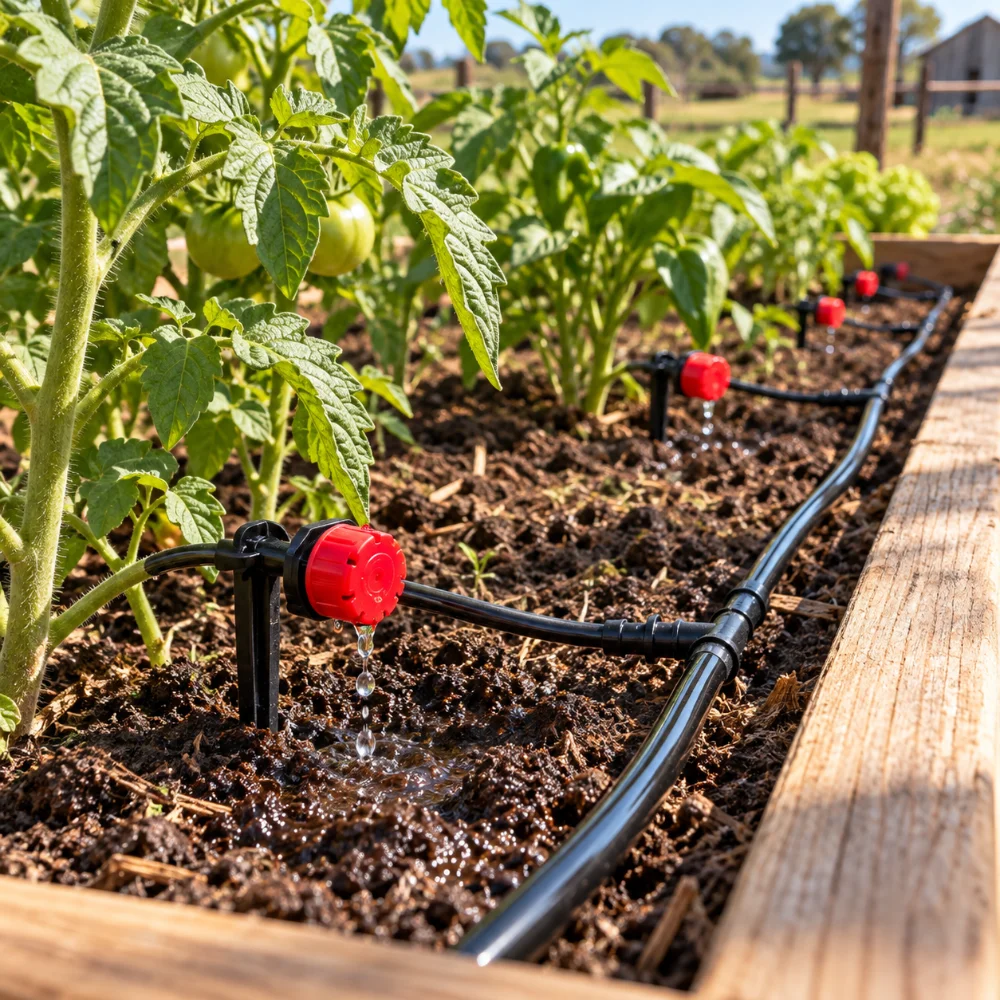
- Join the pump hose to the 1/4" line of a drip irrigation kit. You need a reducer fitting from your hose size down to 1/4" (not included in the kit).
- Power the pump, then twist each dripper to set its flow: off, drip, stream, mist, or spray.
Option B: pump up to a raised tank, then let gravity water
Pump the barrels up into a tank on a stand or a hill, then let it feed the drip kit through its faucet connector. The pump only runs to refill the tank, and the garden waters even when the battery is low. The kit's faucet connector fits smooth faucets and BSP threads; a standard U.S. hose bib may need a garden-hose-thread adapter.
5. Pond and creek setups
- Keep the pump out of the mud. Set a submersible on a brick or flat stone. On the bank, hang the intake strainer a foot or so under the surface instead of on the bottom.
- Keep the electrics dry. The pump goes in the water; the battery, the clips, and every wire joint stay up on the bank, out of the rain.
- Never run it dry. Check that the water level can't drop below the pump while it's running, especially in a shallow creek.
- Check your state's rules. In some states, pumping from a creek or river for irrigation needs a water right or a permit, even for a garden. Your state's water agency can tell you.
- Before a freeze, pull the pump, drain the hoses, and store everything inside.
6. Make it water by itself
- Simplest: an outdoor 12V timer or a smart switch that turns the pump on and off.
- On a pressurized line: a 12V solenoid valve opens only while it gets power, so a timer can open a zone. It needs at least 3 PSI to work, which is about 7 ft of water height or a pump that's running.
- On a gravity tank: a motorized ball valve opens fully and stays where it is when the power goes off, with a lever to work it by hand.
- For a stock trough: a brass float valve keeps it full by itself. Pair it with a gravity tank or with a pump that has a pressure switch, like the Compact Model C or D.
Gear for this job
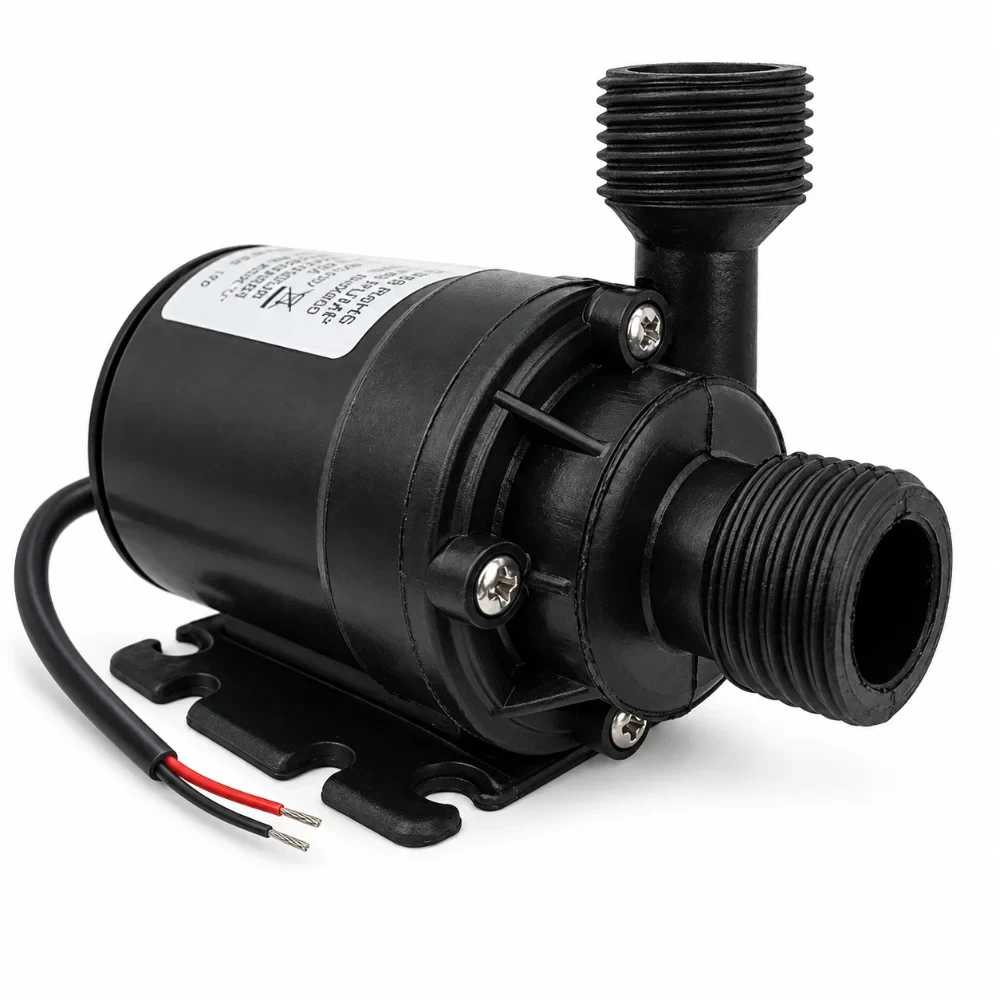 Quiet 12V Submersible PumpUp to 210 GPH and 20 ft of lift. Brushless and quiet.View product →
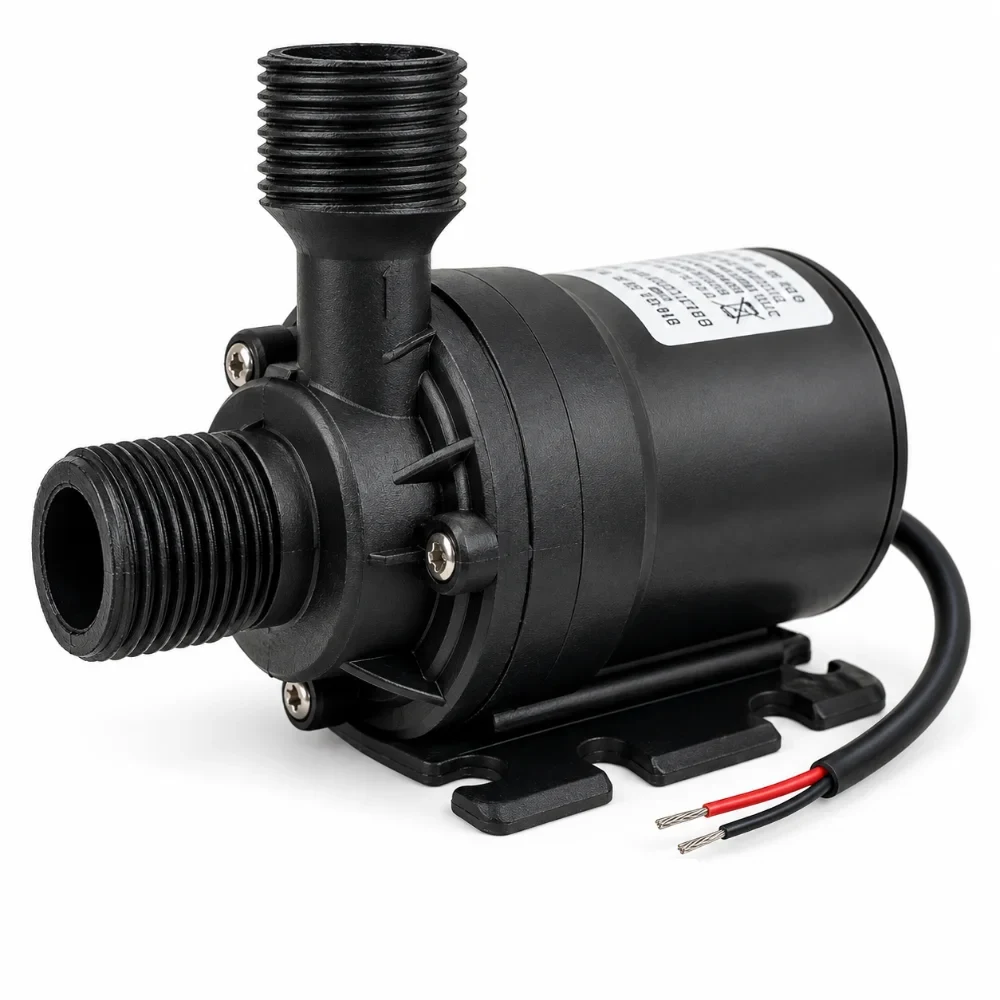 12V Submersible Pump, 260 GPHUp to 26 ft of lift, IP68, 30 W.View product →
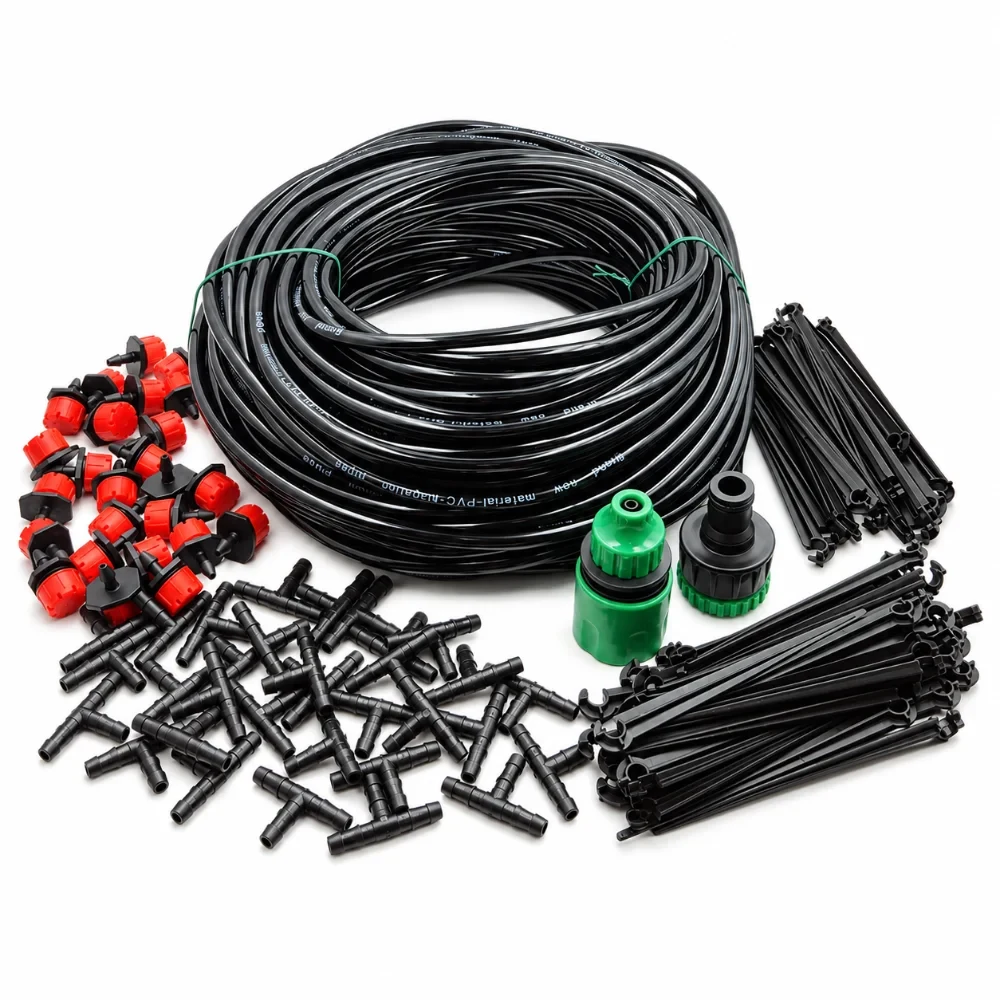 DIY Drip Irrigation Kit1/4" tubing and adjustable drippers, 33 to 98 ft.View product →
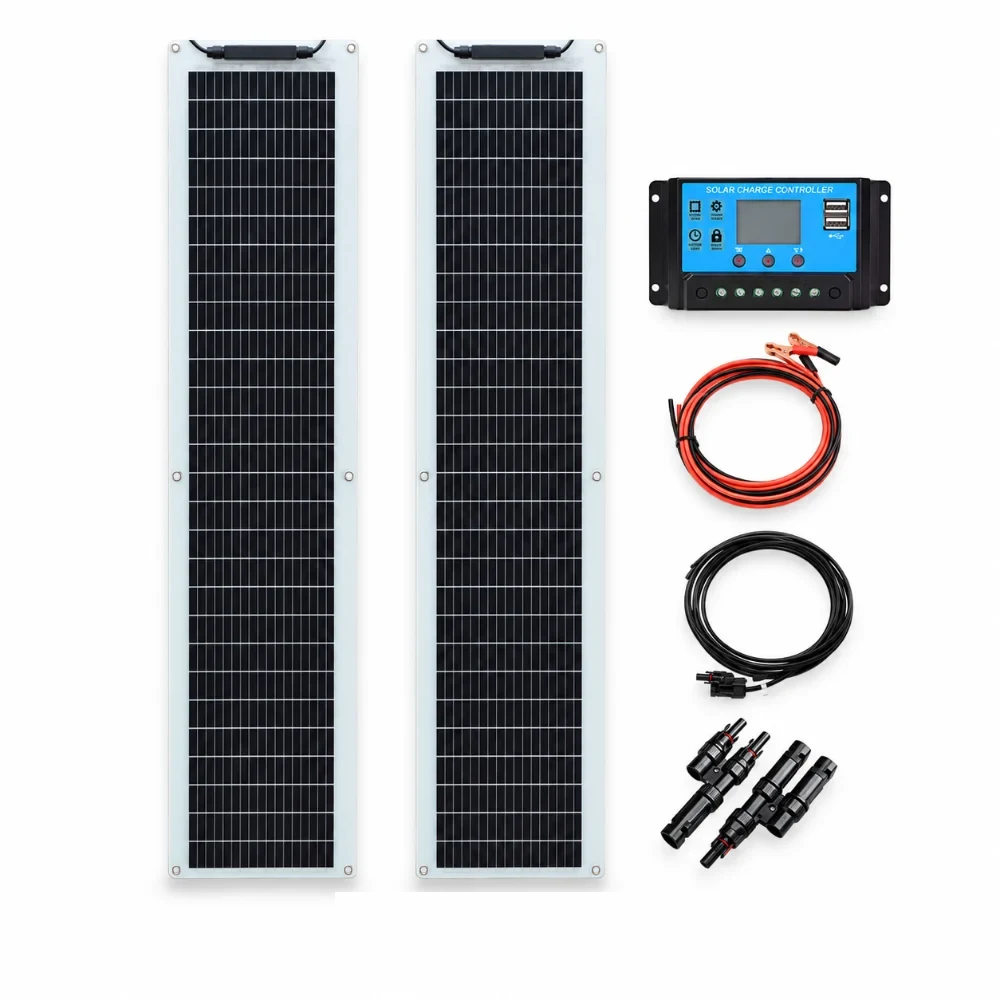 100W Solar Charging KitTwo 50 W panels and a controller to keep a 12V battery charged.View product →
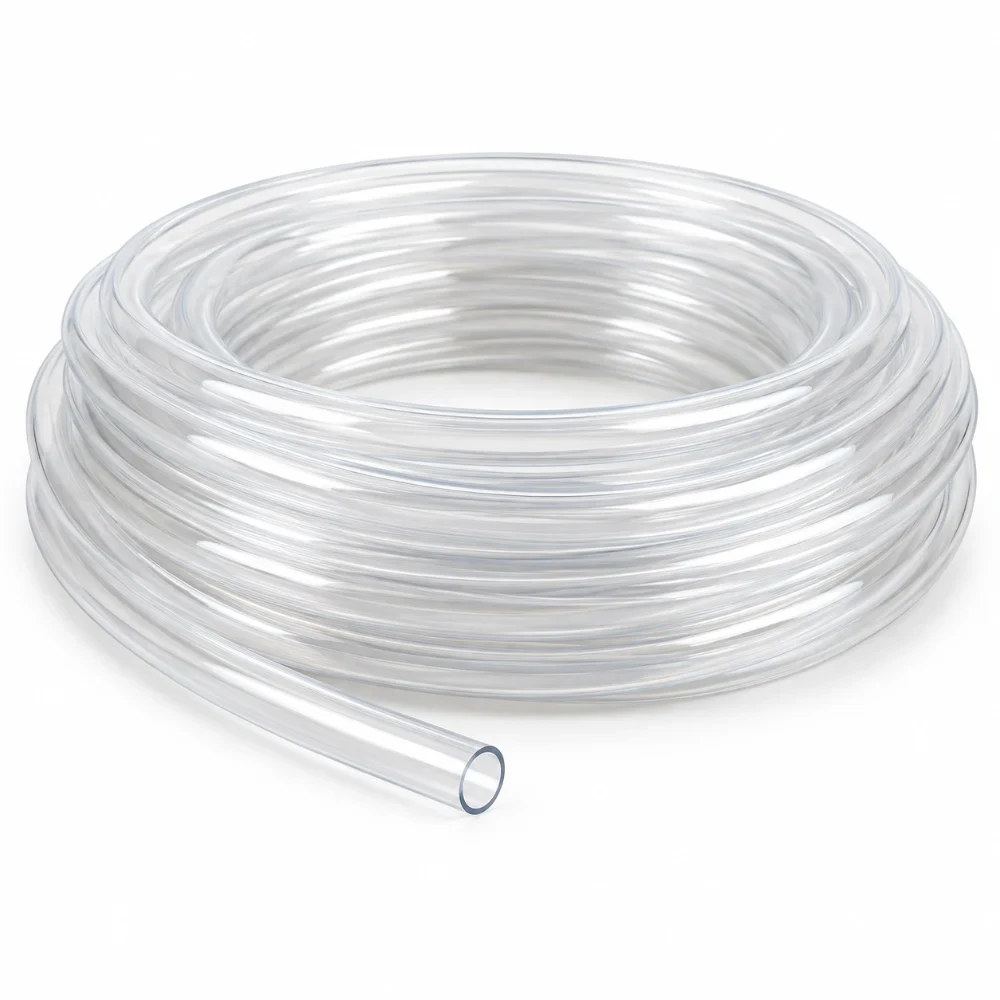 Clear Vinyl Pump Hose, 16 ftFor submersible pumps and gravity lines. 3/8" to 5/8".View product →
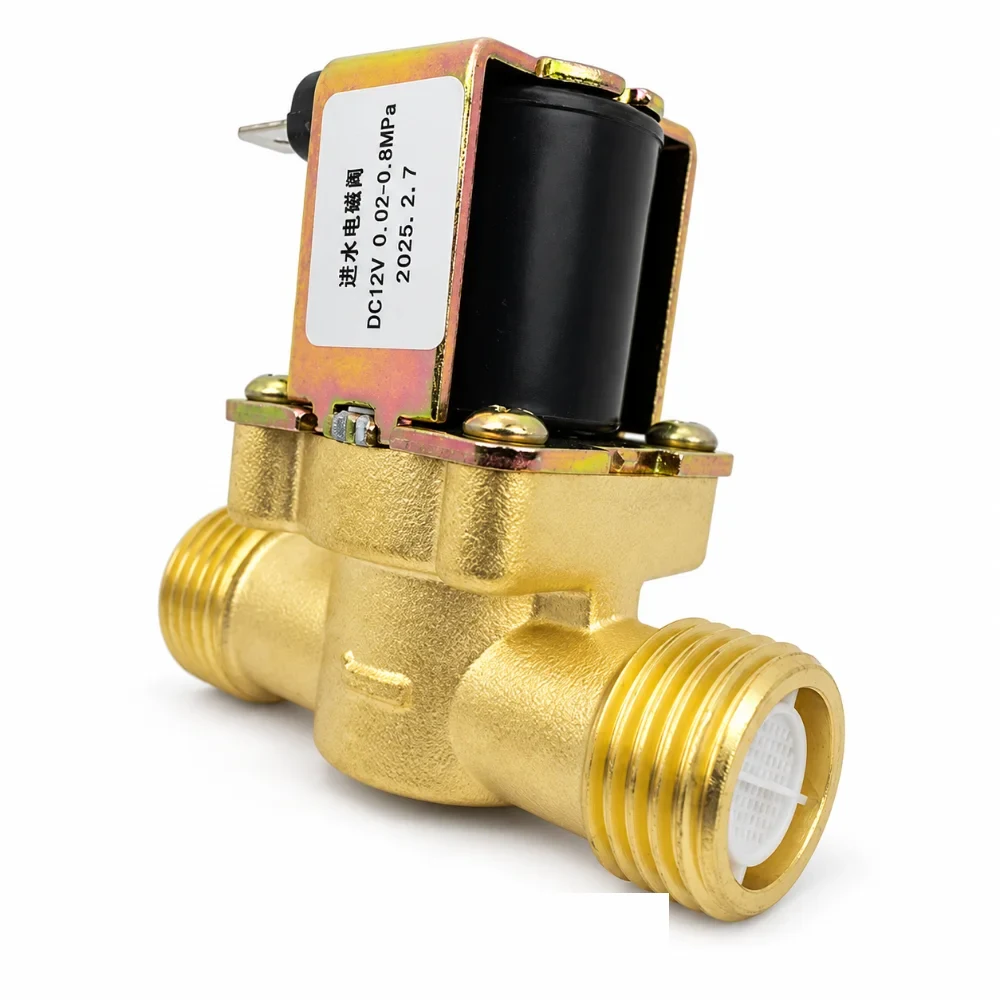 Brass Solenoid Water Valve, 1/2"12V, normally closed. A timer turns the water on and off.View product →
Questions
How high can a 12V pump lift water?
Small 12V submersibles lift about 20–26 ft. Larger 12V diaphragm pumps push water much higher, up to about 100 ft, and 12V/24V well pumps up to about 230 ft. Flow drops as the height goes up and reaches zero at the max lift, so for a useful flow keep the height under about half of the rated max.
How far can a 12V pump push water?
Distance on level ground costs much less than height, but a long, narrow hose slows the water. For runs over about 50 ft, use the widest hose the pump's ports allow, or pick a diaphragm pump, which builds more pressure than a small submersible.
Can I run a 12V pump straight from a solar panel?
It can work in bright sun, but the pump slows or stops every time a cloud passes. A charge controller and a 12V battery between the panel and the pump give steady flow and let you water in the evening.
How do I keep the pump from sucking up mud?
Set a submersible pump on a brick or a flat stone so it sits off the bottom. For a pump on the bank, put a strainer on the end of the intake hose and hang it a foot or so under the surface.
Do I need a permit to pump water from a creek?
It depends on your state. In some states, taking water from a creek or river for irrigation needs a water right or a permit, even for a garden. Check with your state's water agency before you set up.
Can I use the same setup to water livestock?
Yes. A submersible pump in a pond or tank can fill a stock trough just as easily as a garden bed. To keep the trough full by itself, add a float valve and feed it from a gravity tank or a pump with a pressure switch.
More guides
Send us your numbers
Tell us how high and how far the water has to go and what you're watering. We'll tell you which pump fits. Email support@redsteadstore.com or text (703) 843-6988.
Shop 12V pumps · Free U.S. shipping